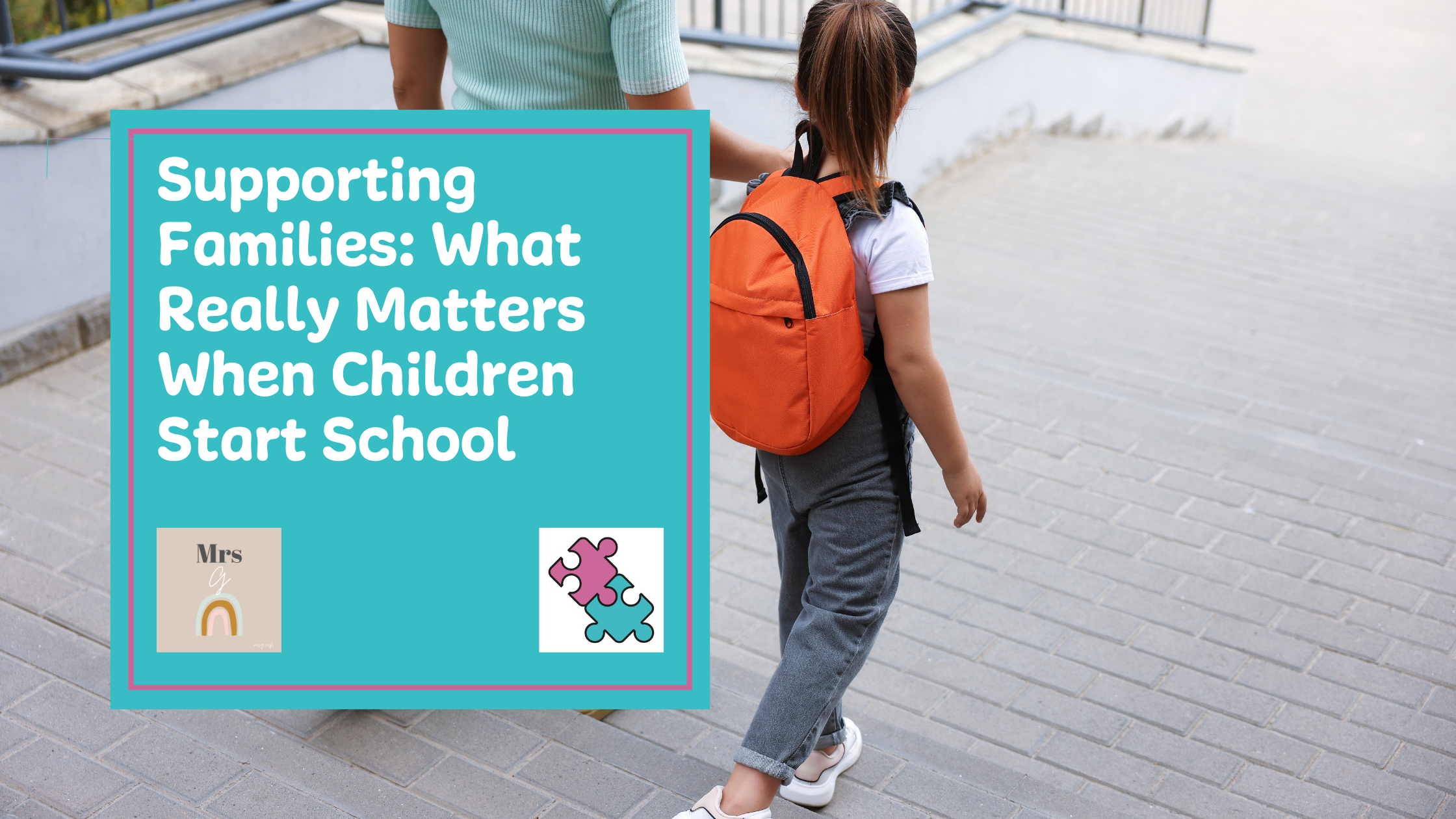
Supporting Families: What Really Matters When Children Start School. A blog post by MrsG_EYFS.
Understanding the Transition From Nursery to School
The move from nursery to school often catches parents off guard. Even families who’ve felt completely settled and supported in your setting can suddenly feel unsure when Reception starts to appear on the horizon. After years of building trusting relationships with their child’s key workers, stepping into something new can deel like a big leap into the unknown. It’s hardly surprising that this shift brings a mixture of excitement and anxiety. For many parents, saying goodbye to a familiar team who know their child inside out can be emotional.
That’s where our role as EYFS practitioners really matters. The reassurance we offer, the information we share, and the time we take to guide families through the process can make the world of difference—helping both parents and children feel calmer and more prepared for the changes ahead.
Building Confidence in Parents
So how can we help parents feel calm, informed and emotionally ready for what’s coming?
Quite simply: by communicating well.
A lack of information is often the biggest source of worry for families. Conversations about school shouldn’t be left until the last minute; ideally, they’re woven into everyday interactions long before applications close. By encouraging parents to visit local schools, helping them think about what to look for, and supporting them with questions to ask, we set the tone for a much more confident transition.
Once school places are confirmed in April, it’s helpful to have next steps ready. Things like:
- Welcome meetings
- Stay and play sessions
- Opportunities to meet the new teacher
- Time for private conversations
These small touches really matter. They can help families feel assured that they’ve made the right choice and that they’re not facing the transition on their own.
What ‘School Readiness’ Really Means
One topic that comes up again and again in transition meetings is school readiness. Parents often feel pressured by ideas like “they should write their name” or they must be able to count to twenty.” It’s understandable, but it also gives us a great chance to reset expectations.
Real school readiness has very little to do with academics. Instead, it’s about a child’s ability to communicate, to manage small tasks independently, to try new things, and to enjoy playing alongside others. Writing, phonics and number work will all be taught once children start school—often quite differently from how parents might have introduced them at home.
Recently, I worked with a local nursery to help parents understand phonological awareness. When I asked whether they felt confident pronouncing the sounds correctly, most admitted they weren’t sure—and that’s completely normal. Many nurseries feed into several different schools, all of which may use slightly different phonics schemes. So even well-meaning activities like “A is for apple” can end up causing confusion later on.
What really matters is independence.
Skills like putting on shoes, using the toilet confidently, holding cutlery, and following simple routines will help children far more in their first few weeks of school than early writing ever will.
When parents understand this, the pressure eases—and everyone benefits.
The Power of Play in Preparing for Reception
A lot of parents still picture school as a place where children sit at tables for most of the day. One of the most valuable things we can do is help families understand how central play is to Early Years learning.
Play is where language develops, friendships form, and problem solving skills grow. When parents join in with their child’s play—indoors or outdoors—they’re strengthening relationships and helping build key foundations for learning. Child led play is especially powerful. Letting children make choices, explore, and follow their own ideas helps them become independent, curious, and confident learners—qualities that will serve them well once they step into Reception.
Supporting Individual Needs
For families of children with SEND, speech and language needs or other developmental differences, the transition to school can feel particularly daunting. These parents often need more time, more reassurance, and more opportunities to talk. Starting conversations earlier, involving families fully in any provision planning, and keeping communication open and honest helps reduce the uncertainty they often feel. Many are already navigating long waiting lists for assessments or specialist support, which makes a strong partnership with their nursery all the more important.
Simply listening—really listening—can make families feel supported, understood, and far more confident about their child’s next steps.
Supporting families through the move from nursery to school is one of the most meaningful parts of our role in the Early Years. With clear communication, honest conversations, and a genuine understanding of what truly matters for school readiness, we can help parents feel informed and reassured at every stage. By championing play, encouraging independence, and recognising each child’s unique needs, we lay the foundations for a positive start to school—one built on confidence, curiosity and strong relationships. It’s the trust we build with families that makes this transition not just manageable, but genuinely uplifting.
MrsG has been teaching in Primary Schools, specialising in EYFS and KS1 for the last 13 years. She has taught across both key stages working as an Assistant Head, before heading back into the classroom full time after having her children. MrsG is now Senior Teacher in a small school, where she teaches in EYFS. She also works with ECTs supporting them with planning, workload, job applications and interview technique through her Instagram account instagram.com/mrsg_eyfs